Your Markdown editor shouldn't rewrite bytes you didn't touch

Open a Markdown file in most editors, change a single word, and save. Then run git diff. If you’re unlucky, you’ll see twenty lines changed instead of one — list markers swapped, headings re-spaced, your hard line breaks “tidied,” a trailing newline added or removed. You changed one word. The editor changed your file.
That’s the quiet tax of tools that treat your document as their data model instead of plain text. This post is about why that tax is worse than it looks, and what the alternative is.
What “byte-fidelity” actually means
A Markdown file is just bytes: characters, spaces, and newlines. “Byte-fidelity” means a save touches only the bytes you edited and leaves every other byte — your CRLFs, your BOM, your trailing spaces, your chosen list style — exactly as it found them. Edit one paragraph, and the diff is one paragraph. Nothing else moves.
It sounds obvious. Almost nothing does it.
Why invisible reflow costs you
The damage isn’t cosmetic — it compounds everywhere plain text is supposed to be an advantage:
- Code review becomes noise. A one-line fix buried in a forty-line reflow is a reviewer’s nightmare. They can’t see what you changed, so they rubber-stamp it — or bounce it back.
git blamelies. Every line now “belongs” to whoever last opened the file, not whoever wrote the sentence. Your history dissolves.- Merges break. Two people who edited different paragraphs now conflict across the whole file, because both editors reflowed everything around their change.
- Trust erodes. Once you’ve watched a tool silently rewrite a file, you start saving less, exporting more, and reaching for the “show source” button you shouldn’t need.
The throughline: a tool that reformats freely turns plain text — the most durable, portable, version-controllable format there is — into something you can’t actually diff.
What it looks like when a tool respects your file
The fix isn’t a setting. It’s an architecture: plain text is the document, and the pretty view is only a projection over it. Render the marks away while you write, sure — but when you save, write back exactly what changed and not one byte more.
In practice that means a one-word fix shows up as a one-word diff:
@@ -12 +12 @@
-teh roadmap
+the roadmap
One line in, one line out. No reflow, no surprises, no “normalization” you never asked for. Your git diff stays honest, your blame stays accurate, and your files remain yours — readable and identical on any machine, in any editor, ten years from now.
That’s the whole idea behind Constly: a WYSIWYG Markdown editor that renders as you type and still never rewrites a byte you didn’t touch. It’s free to use — try it and run git diff yourself.
Keep reading
-
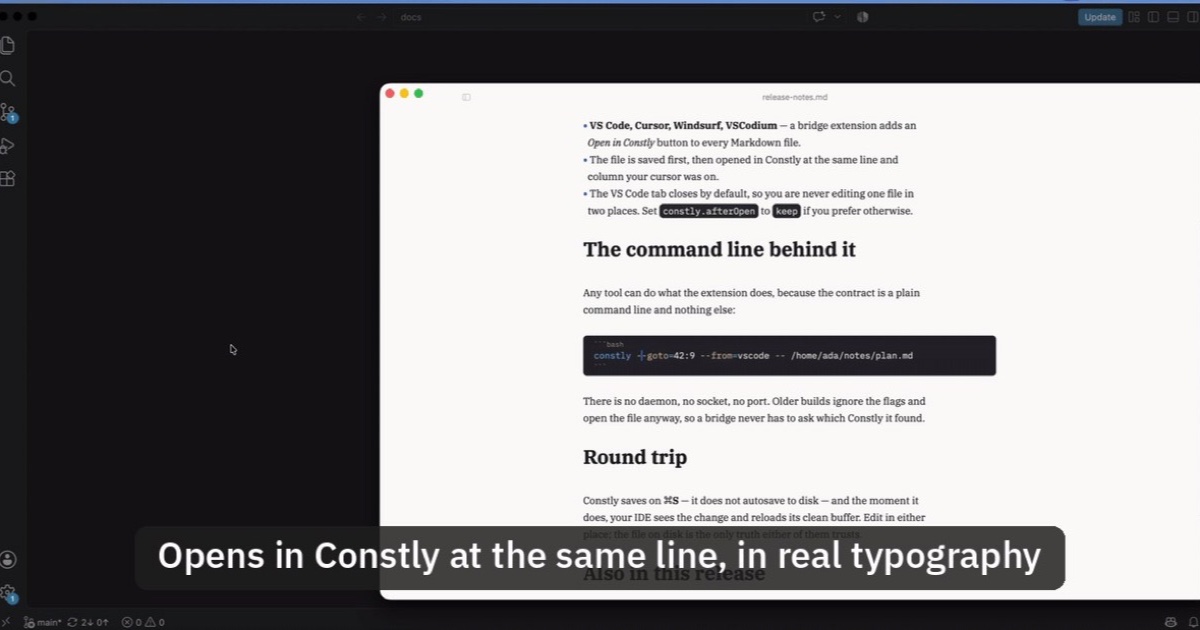
Open Markdown from VS Code, Cursor or Windsurf in Constly
A free extension for VS Code, Cursor, Windsurf and VSCodium: one click saves the Markdown file you're on and opens it in Constly, at your cursor.
-
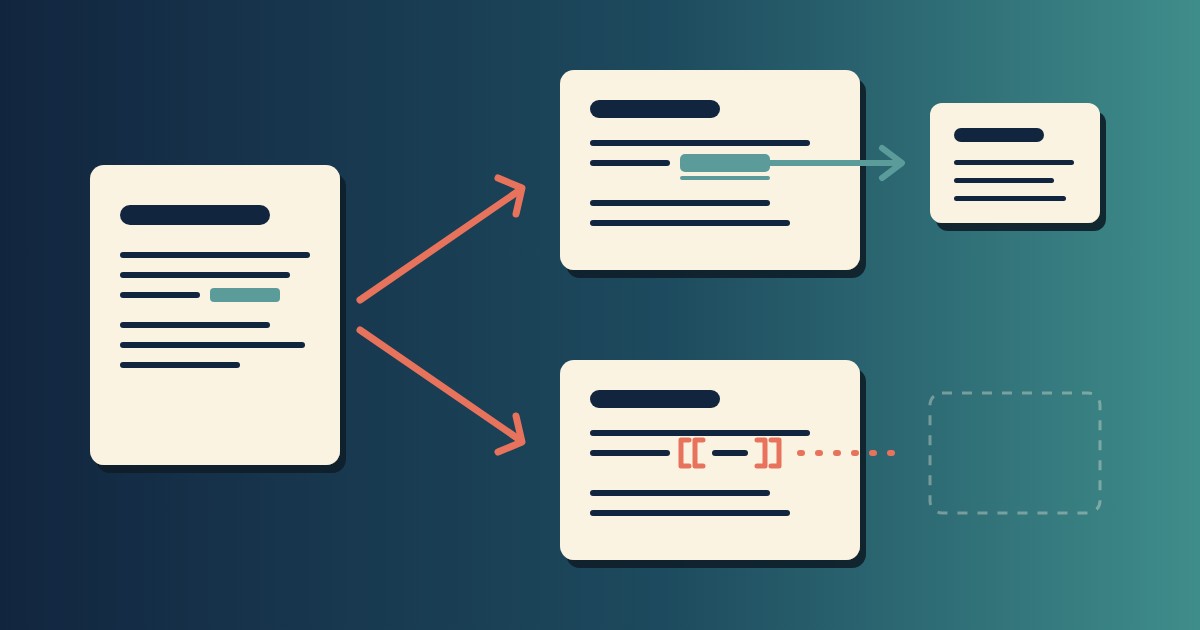
Wikilinks vs Markdown Links: Which One Still Works When You Change Apps
[[Note]] is not part of Markdown, so most tools show it as typed. [Note](Note.md) works in all of them. One test file, three readers, and a one-line conversion.
-
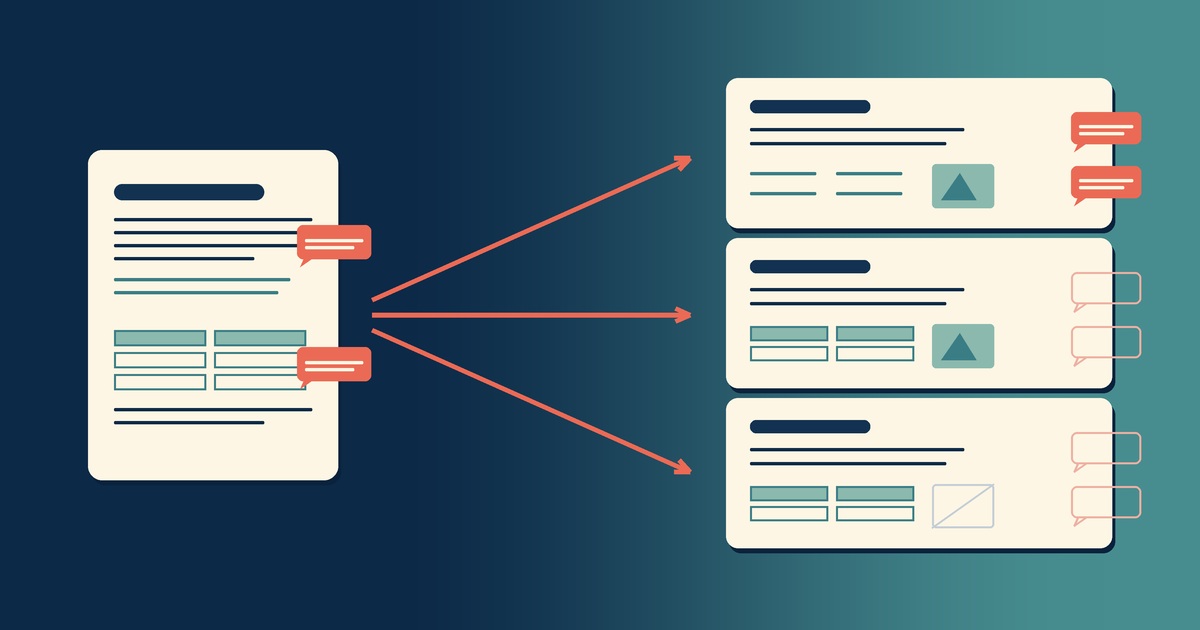
Google Docs to Markdown: Three Routes, and What Each Drops
Google Docs exports Markdown from the File menu, and drops every comment on the way. Three routes out of a Doc, tested on one document, and what each costs.
-
Leaving Google Keep? How to Get Your Notes Out as Markdown
Google Takeout hands you Keep as one file per note. A short script turns them into Markdown, titles, checklists and labels included, ready for any plain-text app.
-
How to Preview a Markdown File on a Mac
Press Space on a .md file and macOS shows you the source, hashes and asterisks included. Here is why, and three ways to actually read the thing.
-

Version History for Your Notes, Free, Forever
Two free layers of version history for plain-text notes: Constly's local snapshots as you save, and git for a history that outlives any app. Plus a ten-minute backup plan.